
Most new patients are already looking for you. They just are not typing “chiropractor”. Good marketing for chiropractors in the UK starts from the words a person in pain actually uses, which is increasingly the name of their pain followed by “near me”. Match those words, in search and in your adverts, and the people within a few miles of your clinic find you at the moment they decide to book.
What patients search for now
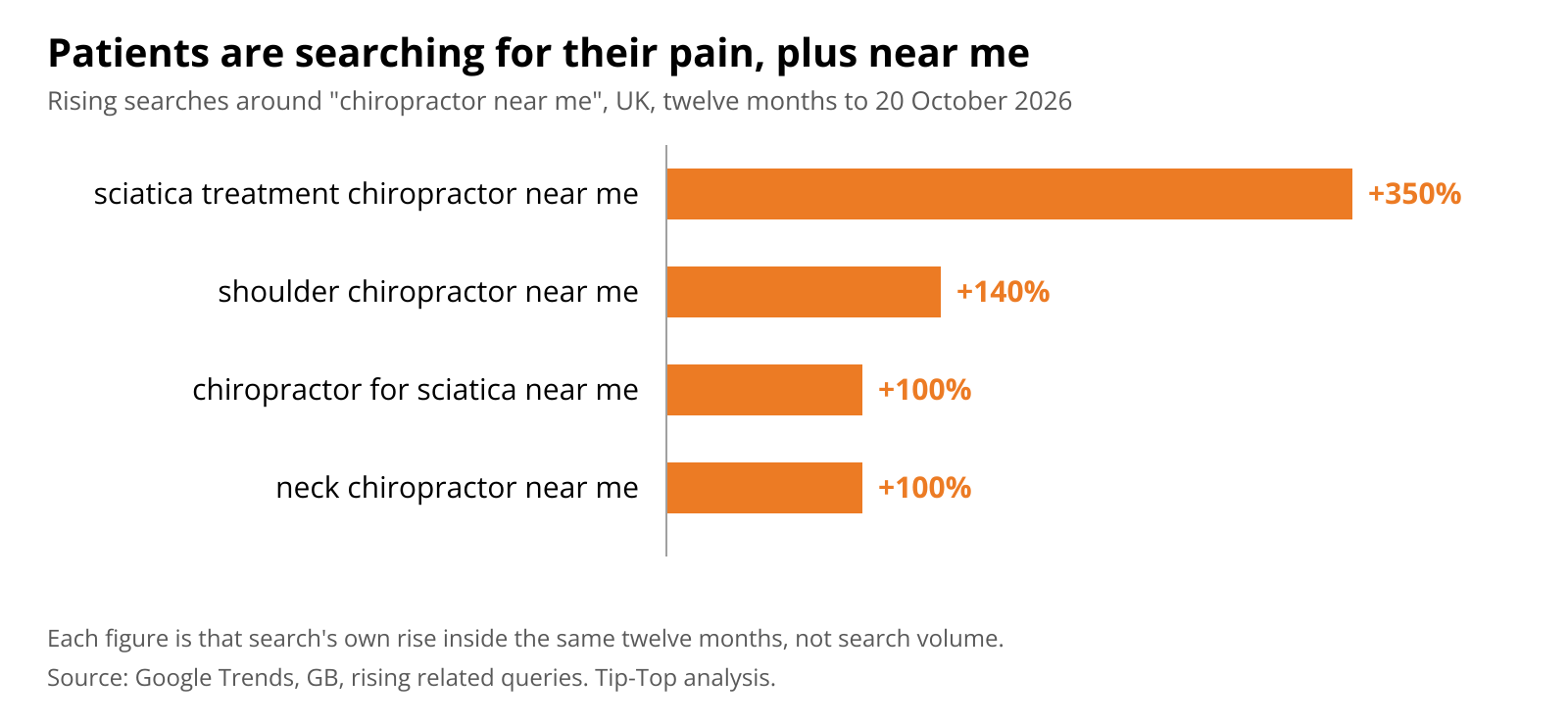
We checked Google’s UK search data on 20 October 2026. Around “chiropractor near me”, the fastest rising searches name a body part or a condition. “Sciatica treatment chiropractor near me” rose 350% over the year. “Shoulder chiropractor near me” rose 140%, and “neck chiropractor near me” 100%. Around the plain word “chiropractor”, the picture is the same: “chiropractor for shoulder pain near me” up 250%, “can a chiropractor help with a pinched nerve” up 160%.
Over a longer view, the plain word is fading. When we averaged UK search interest into whole October to September years, “chiropractor” was 23% lower in the year to September 2026 than three years earlier. That is a share of searches rather than a count of people, so it does not mean fewer patients. It means more of them now describe the problem instead of naming the profession.
Two other rising searches tell you how ready these people are. “Emergency chiropractor near me” rose 180% and “private chiropractor near me” 160%. Someone typing either of those is not researching. They want an appointment this week.
Build around the conditions you are allowed to name
This is where clinics get caught out, so it comes before any advert. The Committee of Advertising Practice publishes a list of conditions chiropractors may claim to treat, and it applies to your website, your Google profile and your social adverts alike. The list includes general backache and back pain, mechanical neck pain, shoulder complaints, sciatica, headache arising from the neck, joint pains and minor sports injuries.
The detail matters for exactly the searches that are rising:
- Sciatica. General references are accepted. Claims that you will reduce sciatic pain are not.
- Shoulders. Shoulder complaints are on the list. Frozen shoulder is excluded by name.
- Necks. Mechanical neck pain is accepted. Neck pain after an injury, such as whiplash, is not.
- Babies and children. “Infant chiropractor near me” is a breakout search this year. You may say you treat babies and children. Claims about conditions specific to them, colic being the usual example, are unlikely to be accepted unless the clinic holds what CAP calls “a robust body of evidence”.
So the rule is simple. For each condition on the list that you see regularly, give it a page on your website and a line in your Google Business Profile services, written in the patient’s words. A page headed “Sciatica and lower back pain”, with your town in its first line, meets that search far better than one headed “Chiropractic adjustments”.
Put the same words in front of local people before they search
Search catches the patient who has already decided to look. Facebook and Instagram adverts reach the people in your area who have had a stiff neck for a fortnight and have not got round to it yet. The same condition led wording works on both.

Every one of those adverts leads with the problem: a knee, a lower back, sciatica. None of them sells “chiropractic”. The patient recognises their own pain, sees a nearby clinic and a clear next step, and books.
Chiro Culture, a single clinic in Chertsey, had relied on Google Ads alone. Earlier Facebook campaigns, run before we worked together, had not booked a single patient. We rebuilt their adverts around specific complaints, headaches among them, and connected the campaigns to their JaneApp diary through Clinic Convert. The case study sets out how that changed the clinic’s calendar.
Count booked appointments, not enquiries
An enquiry that never books fills nothing. The clinics that grow measure what happens after the form is filled in: did the person book, and did they turn up.
Woodstock & Stow, two clinics in the Cotswolds, track exactly that with their front desk teams. Their case study reports booking conversion regularly above 60 to 70% and, in many months, show up rates of 100%. Those are their figures, from two clinics, and your own will depend on your area and your offer. The method transfers: when the adverts are judged on booked patients, the budget moves towards the conditions that fill the diary and away from the ones that only fill the inbox.
Where to start
- List the five complaints you see most, and check each against the CAP list.
- Give each one a page and a profile service, in the words a patient would type.
- Run adverts to people within a few miles of the clinic, one condition per advert.
- Judge every campaign on booked and attended appointments.
That is the work our chiropractor and physio marketing covers, from the local search side to the Facebook and Instagram adverts and the booking tracking behind them. If you would like us to look at which searches near your clinic you could be meeting, book a free 20 minute strategy call.